How to Know if Your Applications Were Rejected in Apple and Apply Again
Many developers grumble against Apple's closed ecosystem approach, only you can't contend that it's i of the visitor's biggest competitive advantages.
However, maintaining that ecosystem means Apple tree has to tightly control all aspects of their globe, especially with tertiary-party app developers.
That'southward why the App Shop has the strictest approval process compared to other app marketplaces like Google Play.
In fact, only last yr, Apple reportedly rejected 150,000 apps submitted to their shop.
Being enlightened of the nearly common reasons for App Shop rejection is vital for developers to avoid unnecessary delays, added costs, and development headaches.
Then, here's what to cantankerous off your app store submission checklist if you desire to succeed.
App Content Is Inappropriate
Apps dealing with sensitive or objectionable content, such every bit porn and gambling, are automatically rejected by the App Shop.
They would also not approve apps that encourage dangerous beliefs similar racism, realistic violence, and substance abuse.
It's easy to see why Apple tree would screen out such types of content.
Remember that, equally per their guidelines, they intend to give all their users a safe experience.
Any app that threatens this bones tenet volition get cut out.
Luckily, this is a problem that you lot can rapidly spot and solve equally early as your app planning stage.
If yous feel that your app will hands offend people or entice them to break the law, rejection is highly probable.
You tin either change your concept or avoid launching it through the App Store birthday.
The tricky part, though, is when inappropriate user-generated content gets involved. If information technology ends upwards dominating your app, Apple will remove it from the App Store.
To get around this dilemma, you can place filtering or reporting mechanisms to cake inappropriate content and ban repeat offenders if necessary.
This is how social media sites like Facebook and Instagram control the integrity of their platform's content.
The App Is a Copy of Another App
Apps that are closely similar to another app already in the App Store will also neglect to get approving.
These so-called copycats ofttimes accept the acknowledged app in the App Shop, do some minor changes, then laissez passer their product off every bit a fresh thought.
Breathy copying should exist avoided by all developers on any platform, not but Apple app makers.
As well being a rip-off of the difficult work done by other programmers and designers, information technology's also a lawsuit waiting to happen.
The solution is unproblematic—you should come up with a unique app concept.
Do thorough research on existing apps on the App Store to run into how saturated your app category is, then endeavor to come upward with a different feel.
Even if your app idea is unique, e'er use original UI and icon designs to separate it from the pack.
A similar but unrelated event is spamming, which is when a developer submits multiple variations of the same app.
For example, a developer might create separate map apps with the same features and UI but for different cities or countries.
Apple treats spamming as a more serious offense which can end upward having your developer account removed.
The best resolution is to combine all app variations into one container app.
Hardware and Software Are Not Compatible
Making universal apps that run well and look not bad on all of the latest Apple tree devices and iOS updates is a fantastic way to increase your approval chances.
In particular, you should ensure that iPhone apps work well on a bigger iPad screen, and vice versa.
The cardinal to creating universal apps is automatically resizing your app's layout depending on the screen dimension or orientation (portrait or landscape) the user is on.
This is chosen an adaptive layout, and you tin can use Apple's layout tools similar Auto Layout to achieve this.
You should also apply higher resolution assets and images that won't blur when blown upward. This ensures your UI elements remain crisp when displayed on an iPad.
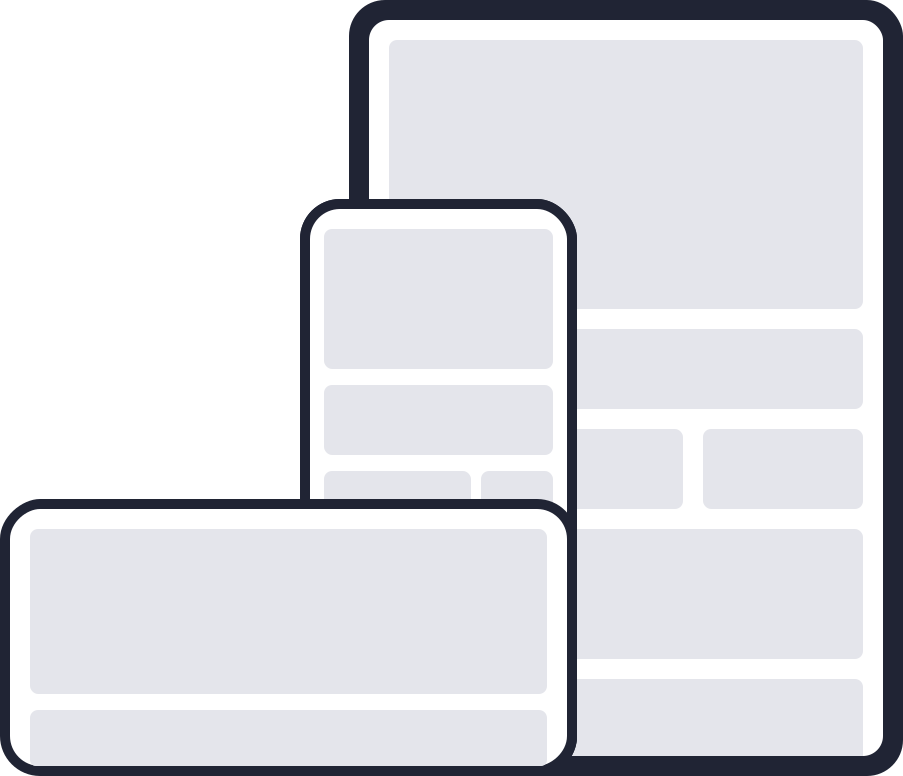
In one case y'all have an adaptive layout, edit your app deployment settings in Xcode to ensure your app gets deployed on all Apple platforms.
Gear up the target device to both iPhone and iPad, and optionally the deployment target to the lowest iOS version it tin can run on.
Withal, but running the app on every Apple device is just the beginning.
It's as well vital that you don't damage or dethrone the user's device in any way.
Excessive battery usage and heat generation are common examples.
Additionally, y'all tin't ask users to disable core iOS features or run unauthorized background processes on the user'southward device.
To avoid these performance issues, brand sure your app is using resources efficiently.
For example, it's ameliorate to utilise notifications to allow users know that a countdown has finished instead of an in-app timer that continuously consumes resources.
Reduce or avoid background processes to make sure your apps employ up as piddling memory every bit possible when they're idle.
You Take No Privacy Policy
A privacy policy is a legal agreement that shows users how your app collects and deals with personal data.
Apple tree requires all app developers to include a privacy policy to comply with privacy laws, such as the GDPR in Europe and various FTC rules in the US.
Even if your app is not collecting any personal data, you should still accept a privacy policy in place.
Simply country that your app is non getting any personal data from your user in any style. Hither's an example.
To avoid rejection, brand certain that your privacy policy is easily accessible both within your app and app page in the App Shop.
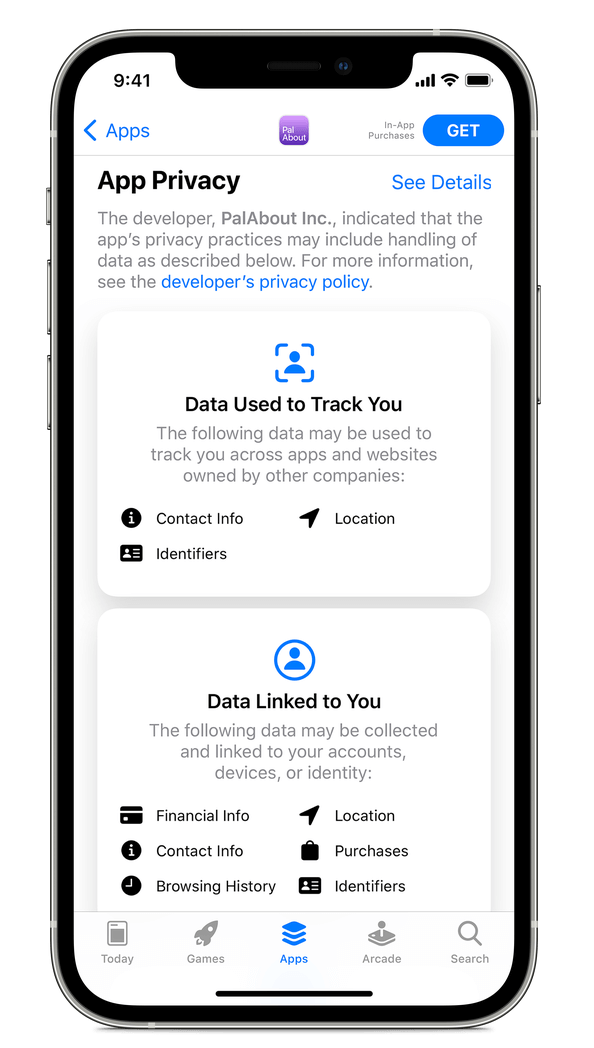
It should explain how you use the specific data that y'all collect: how it'due south stored, and whether or not yous share it with other third-party entities.
While a privacy policy entails legal linguistic communication, writing it isn't also difficult. Every app in the App Store has a privacy policy, and y'all can simply base yours off theirs.
Nevertheless, when in doubt, it's nonetheless best to become a lawyer to assist you write one to ensure information technology covers everything.
App Wants to Share Personal User Information
Apps must abide past Apple's privacy rules, including how data is tracked, stored, and shared with 3rd-party entities.
A alienation of these rules can be grounds for the removal of your app from the App Shop.
In a way, this isn't at all bad for legitimate app developers similar you. It shows people how you value their data and privacy, which can foster trust with your user base.
As with our previous suggestion, including a privacy policy in-app is the first stride to abide by Apple's privacy rules.
All the same, to become across that, you demand to follow through and exist transparent.
If you intend to share their data with another company, disclose who that is and how they'll use it.
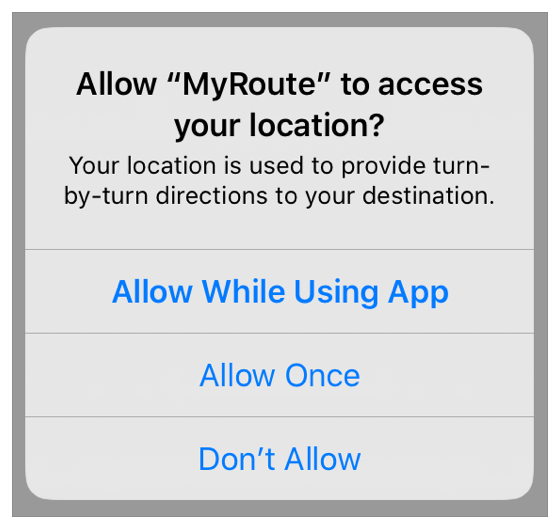
Above all, users must have command over their data at all times.
E'er ask permission from your users get-go if your app needs to collect any, and give them the option of deleting all copies of their personal information on your side whenever they want.
Yous're Using Private API
A private API is any Apple tree office or class that'southward undocumented and, therefore, not meant for developers to utilise.
Including individual API calls in your app code will flag a warning from Apple tree and forestall approval.
Private APIs are used internally by Apple for their documented public APIs. Using private APIs is risky because their functionality is not guaranteed.
They tin can be changed or replaced past Apple without any warning, potentially affecting your app's functionality.
Fixing private API issues is relatively straightforward—simply supplant the private API calls with public ones.
To avoid using them in the time to come, stick to functions and classes officially documented by Apple in their SDK, then update any public API functions in your lawmaking that are no longer supported.
Bugs and Crashes Occur During the Review Procedure
The easiest and nearly common style to fail to obtain approval from the App Store is if your app crashes or has pregnant bugs during the review.
Apple is notoriously uncompromising of this standard, and hence why it's at the top of their app rejection listing.
To foreclose this from happening, y'all first have to realize just how rigorous Apple's review process is.
Your app will face a series of stress and performance tests designed to break your app.
Knowing this, the best way to ensure approval is to perform the same level of testing yourself before submission.
Ensure that every feature is thoroughly reviewed and tested for all possible situations to expose potential flaws and bugs.
It's too crucial to test run your app physically on every Apple tree device (and non but rely on emulators) to grab whatever UI or layout glitches.
You lot can use Apple'south TestFlight or other third-party services to invite beta testers to go through your app earlier launching it on the App Shop.
Some other great option is to accept your testers utilize issues-reporting tools, such as Milk shake, which allows them to written report any errors instantly by shaking their device.
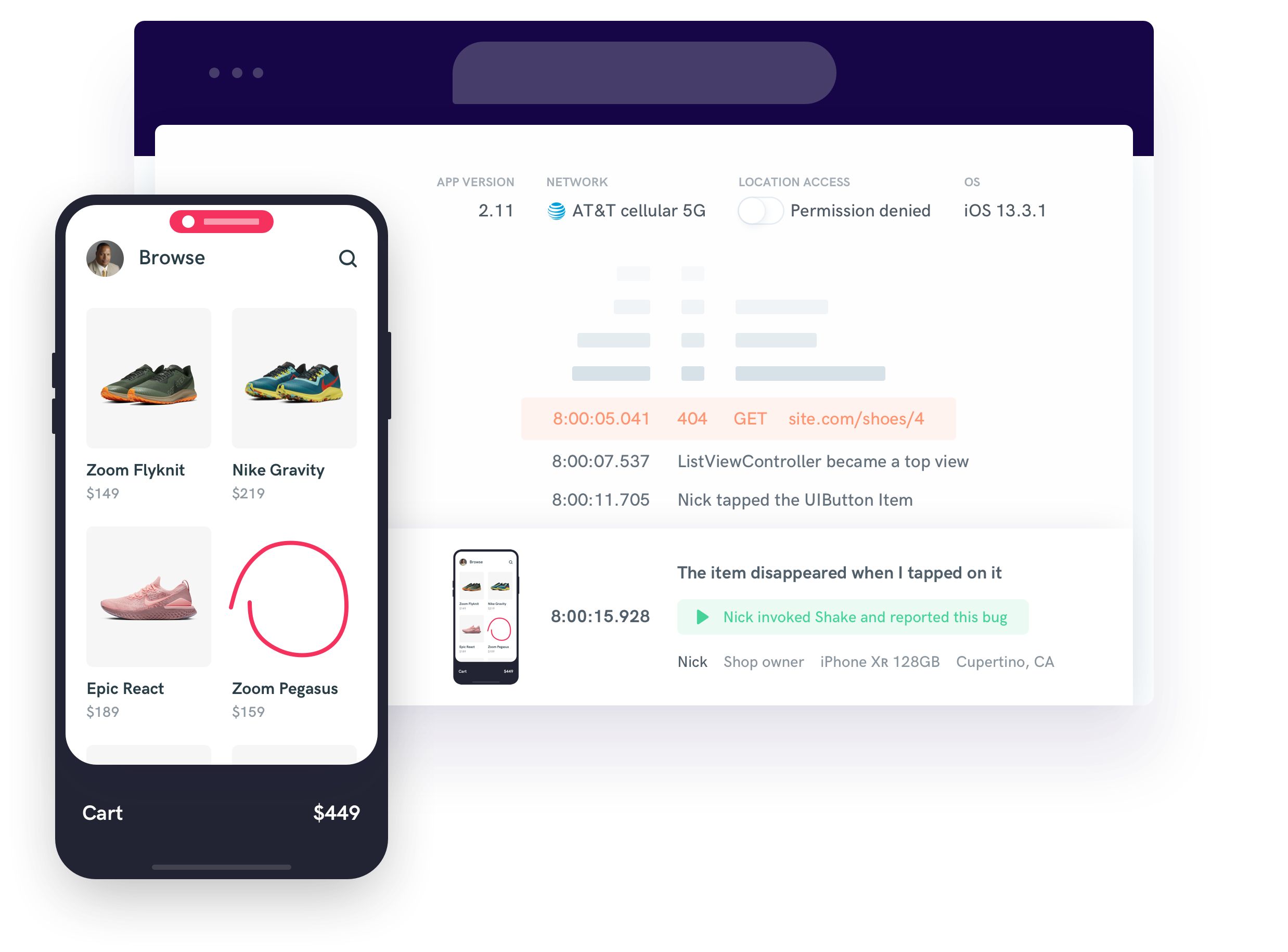
Of grade, it'southward unrealistic to expect that y'all'll catch every possible bug and error during testing, and that'due south not the goal here.
As long as you can detect and fix all the major errors that will make your app unusable, you should get approval.
Unusually Long Load Times
Apps that take an unusually long fourth dimension to load can lead to a poor user experience and are, therefore, candidates for rejection.
Boring load times tin crusade users to think that your app froze or their device crashed.
It almost always leads to frustration when someone wants to use your app to solve an immediate problem, and they can't.
The outcome? Users quit using your app in frustration and eventually uninstall it from their phone.
At that place are many causes of irksome load times, simply equally there are multiple means to fix it.
If you tin, simplify the user interface and optimize your lawmaking to make it run faster. You can also try compressing images and assets to reduce load times.
For apps that demand to connect to a server, ensure that the connexion is being used efficiently.
For instance, asking but the information the app needs to display immediately to reduce bandwidth usage.
If your app loads a large volume of content from servers, consider using content commitment networks (CDN).
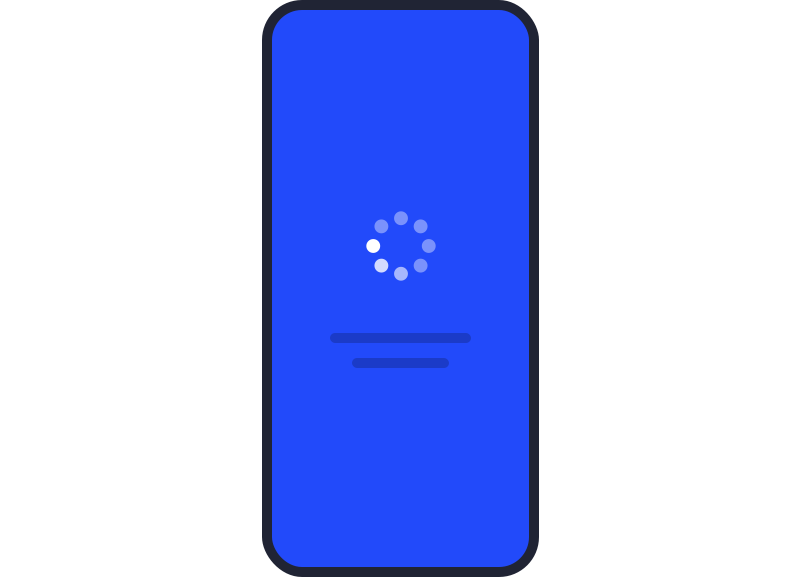
If boring load times are unavoidable (for example, in graphics-heavy games), it's a good idea to mask them with a splash or loading screen.
Displaying in-game tips or other helpful content is a mutual tactic used in video games and might be an excellent method for your app.
Broken Links in the App
Broken links are frowned upon by Apple tree.
These are links that point to an incorrect or non-existent resource on the Internet and, therefore, do not work.
A cleaved link is withal another sign of poor functioning that degrades your user's experience.
For example, if a link to your support page is not working, information technology will be harder for your users to solve an immediate problem.
This will inevitably reflect poorly on y'all as a programmer, equally it shows neglect.
To avoid such an event, thoroughly check all your app links and see if they point to the correct page, especially Help pages and your privacy policy.
In case you lot deleted or moved the webpage that a link is pointing to, a quick fix is to do a uncomplicated redirect to the new resources.
Placeholder Content Is All the same in the App
A placeholder or dummy content is a temporary container that'due south often used during evolution to correspond where content will eventually become once your app goes live.
The most notable example of this is the "Lorem Ipsum" template used in web and print blueprint.
Because it'southward a development technique, having placeholder content in your app is a sign that it's non all the same complete.
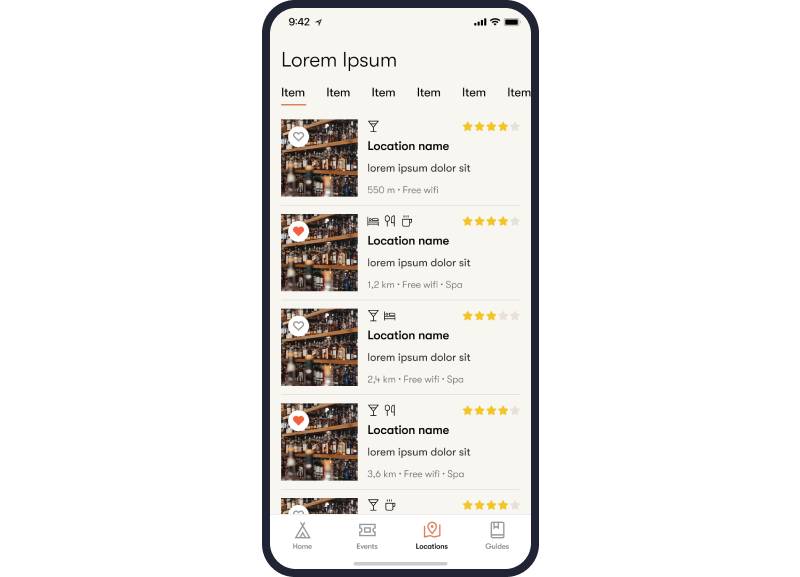
Non-completeness violations similar this are i of the chief reasons to get rejected from the App Store. They point developer neglect and cast your app in a poor lite.
Having placeholder content in an app that's supposed to be complete might seem like a elementary omission, but it's surprisingly mutual.
It can be relatively easy to miss a placeholder or two in the final app, particularly in tight development schedules.
The best way to avoid this upshot is to have a thorough testing regimen and pre-launch checklist in place.
Inspecting every corner of your app ensures that you catch these simple mistakes before submission.
App Appears to Be Unfinished
As we've covered in the previous item, Apple rejects whatever app that it deems incomplete, and so ensure your app is 100% set up before submission with a pre-launch checklist.
Most items on a pre-launch checklist are trivial but crucial, similar updating links, removing temporary content, and making sure all of your app's features are working.
Also, provide a working dummy account, so app reviewers can check features that require a login.
Nonetheless, even if your app is complete, using the wrong version number or words in your app proper name can flag it equally incomplete in Apple's eyes.
App versions similar "0.one" or words like "beta" or "alpha" ship the indicate that your app is yet in the beta stage (even if it'southward not) and might crusade App Shop rejection.
Remember that the App Store is merely for finished, fully functional apps that are ready for distribution. Betas and trials should exist deployed on TestFlight instead.
Incomplete or Inaccurate Metadata
Metadata refers to the data users see on your App Store page before downloading your app.
It includes app descriptions, screenshots, historic period ratings, payment options, and privacy data.
Having incomplete or inaccurate metadata tin can mislead users with the wrong data, which can break their trust. Unsurprisingly, Apple will refuse to approve your app considering of this.
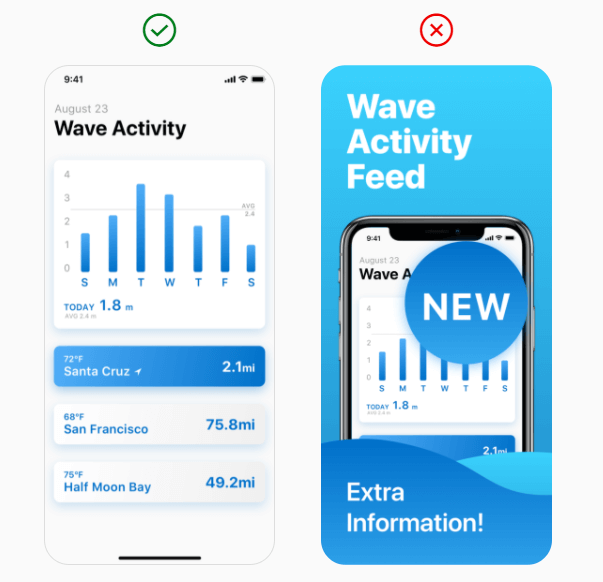
The primal to creating authentic metadata is transparency.
In your app description, clearly describe what your app can do. Avert using unrelated words solely to exaggerate your app's features or boost App Store visibility.
The screenshots should depict the app in-use and not just the title screen or other artwork.
If your app has in-app purchases, it's critical that you lot state this clearly on your metadata.
Information technology'due south good practise to point which features of a gratis app are really costless and which ones require a subscription to unlock.
Ensure your app is too rated for the right age group so that information technology can be appropriately filtered through the App Store'south parental controls.
Lastly, think that users of all ages tin can see your app'southward metadata in the App Store, so make sure information technology's appropriate for everyone, even if your app's content isn't.
As an case, your app icon and screenshot should not depict violence or scary scenes.
Low-Quality UI
Apple expects that all apps have a refined and well-designed interface that's like shooting fish in a barrel and intuitive for users.
A poor UI that fails to meet standards tin can make your app difficult to navigate, warranting rejection.
Fortunately, Apple has plenty of resource for app developers to ensure this doesn't happen.
Their Homo Interface Guidelines are among the nearly important of those resources. They are a gear up of rules that define tasteful and user-friendly UI.
They besides comprehend best practices on aspects ranging from the style your app launches to how you lot onboard users.
You tin can also use Apple'southward UIKit framework, a set of adjustable UI components that adheres to the Man Interface Guidelines.
Using these elements ensures that your app looks fantastic and consequent across all Apple devices.
Sticking to these guidelines and frameworks is a safety way to guarantee your app UI's approval.
Determination
The inner workings of Apple tree's app review process might be a mystery, but it's not hard to encounter why rejections happen.
Fugitive them essentially boils down to creating a unique, well-designed, and loftier-quality app feel that your users will delight in.
As long every bit every detail of your app delivers this, approval is more than or less guaranteed.
Want more info on how to create a meliorate app experience? Bank check out our slice on the common app development mistakes you should avoid.
Source: https://decode.agency/article/app-store-rejection/

Post a Comment for "How to Know if Your Applications Were Rejected in Apple and Apply Again"